
Virtual Individual Therapy in the San Francisco Bay Area and Throughout California
Therapy that has space for all of you.
Relational, somatic and trauma-focused therapy for when you understand a lot about yourself but still feel stuck—or when you simply know something needs to change and would like support finding a way forward.
You don’t have to arrive at therapy knowing exactly what’s wrong or what needs to change. You can just show up as yourself.
Therapy can be a place to slow down, to feel more alive, to get curious about what’s happening, and to explore what supports you.
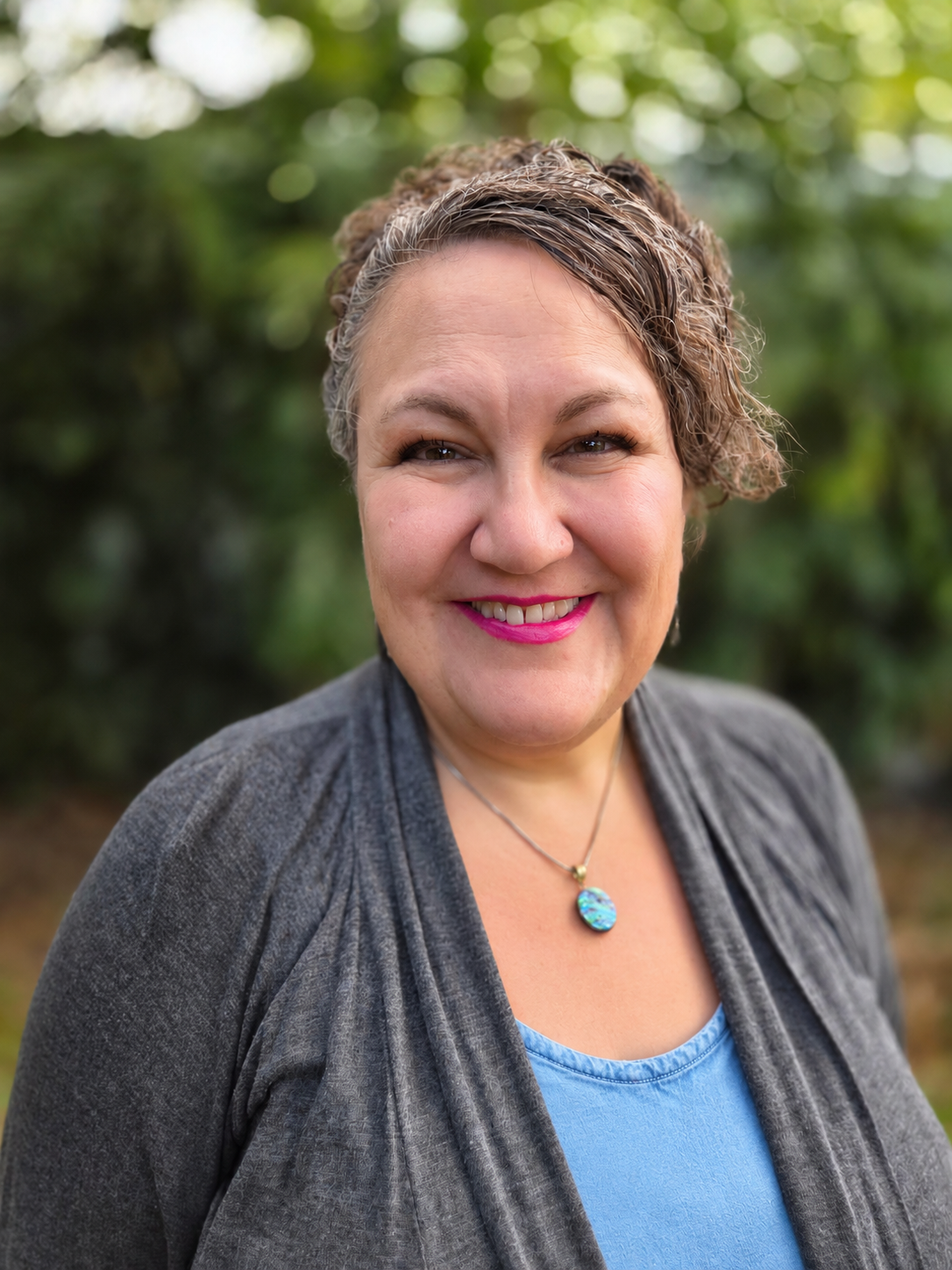
Therapy begins with relationship.
My practice is rooted in being two humans together, first.
I bring my clinical training and experience into the room, but I also bring my humanity. Being with a kind, caring human, and building a relationship where you can be yourself creates the soil in which healing can happen.
When you come to therapy, you don’t need to know how to do therapy with me. You don’t need to know how to work somatically, get curious about different parts of yourself, or even know what you want to talk about that day. You don’t have to hold the therapeutic process. That’s my job.
You can come as you are.
I might start simply: Hi. How are you? What’s been happening in your world? As we talk, we’ll pay attention together to what begins to emerge. A feeling, a memory, something happening in your system, a shift in the room, or something you say may naturally give us a place to go deeper. From there, I can offer a path to take if it naturally supports what’s unfolding.
Therapy isn’t something I do to you. We engage in it together. If something doesn’t feel right, if you need me to slow down, or if you need something different, I want you to feel safe enough to let me know.
You don’t need to know exactly what’s going on to know that something isn’t working.
Maybe you keep having the same fight with your partner. You say yes when you want to say no. You can’t stop replaying a conversation in your head. You know you’re safe, but you don’t feel like you are. You shut down when you want to stay connected.
Sometimes you know exactly what you want to work on. Sometimes we will figure that out together.
What therapy can make room for
Over time, you may feel more grounded and at home in your body, with more space between your response and how you react. It may become easier to know and say what you need, set boundaries, stay connected during conflict, and treat yourself and the people you love with greater care.
As anxiety and old patterns take up less space, you may find more room for choice, self-trust, connection, creativity, rest, humor, and play—and more energy and inspiration for the parts of life you’ve been wanting to return to or begin.
Some of the things I work with
Complex Trauma & PTSD
Attachment & Relational Wounds
Childhood Emotional Neglect
Anxiety & Overwhelm
Narcissistic & Emotional Abuse
Sensory Overload
The Exhaustion of Masking
Grief & Loss
Identity & Systemic Trauma
Burnout
Boundaries & Relationships
Body Image
Gender Affirmation & Support
Life Transitions
A Somatic Approach to Trauma Therapy
Sometimes you already know why.
You know where the pattern came from. You’ve thought about it, talked about it, maybe even worked on it in therapy before. And still, when something challenging happens, you respond before you have a chance to remind yourself of everything you know.
My approach is relational, somatic and trauma-focused. Meaning, we can talk, understand and make sense of things together, and we can also pause and notice what is happening while it’s happening.
A feeling. A sensation. An impulse to pull away. Perhaps a part of you shows up with criticism or self-doubt. Maybe you notice yourself going numb or suddenly feeling tired. Or maybe you notice yourself responding in a way that feels familiar, that you don’t want to.
We don’t need to go looking for these moments. They show up.
And when they do, we can get curious together.
There isn’t one right pace for healing.
We don’t have to rush toward the hardest thing that’s ever happened to you. And we don’t have to slow down just for the sake of slowing down.
Sometimes therapy means going deeper into something painful. Sometimes it means noticing that today isn’t the day to do that.
We might spend time noticing what is happening in the present moment, getting to know a protective part, practicing a boundary, grieving something you’ve lost, or sitting with what’s happening in your life right now. And sometimes, when it feels right, we may work more directly with experiences from the past that are still showing up in the present.
There’s a saying in trauma work: slow is fast.
But always staying slow isn’t the goal. There can also be movement, energy, spontaneity, play, anger, grief, joy, and aliveness in healing.
Therapy for therapists & healers.
When you’re used to being the person who holds space for others, it can be important to find a place where you don’t have to do that, a space where you can feel met, or even held.
You know the language of therapy and understand the theory behind it. You may understand your patterns, recognize your defenses, and have a pretty good idea of why you do what you do. None of that means you don’t need a therapist of your own to hold a container for you.
I enjoy supporting other practitioners and welcome co-creating a space where you can exhale and explore all the complexities of being a human in this world right now.
We are directly impacted by the world we live in.
Therapy can help us understand what’s happening inside us. But not everything we struggle with originates there.
Our lives are shaped by our identities, our bodies, our relationships and communities, and the systems and cultures we live within. Racism, ableism, transphobia, homophobia, fatphobia, economic insecurity, political violence and other forms of oppression have real psychological and physiological consequences.
It is important to me to create space to be with what is happening in the world and for whatever is coming up for you: grief, anger, fear, rage, exhaustion, numbness, uncertainty, or something else.
My practice is queer and trans affirming, anti-racist, sex worker affirming, supportive of neurodivergent experiences, rooted in disability justice, and grounded in an understanding of trauma that emerges from systemic and cultural harm.
COVID-conscious & Long COVID support
If you are living with Long COVID or chronic illness, are immunocompromised, continue to take COVID precautions, or are navigating relationships and a world that may not understand the choices you’re making around your health, you don’t need to defend those choices here.
Your precautions will not be pathologized. Your concerns will not be dismissed.
We can make room for the grief, isolation, anger, uncertainty, changes in identity or capacity, relationship strain, and other experiences that can accompany chronic illness and COVID-conscious living.
What it’s like to work with me
I’m an engaged and present therapist. Healing is possible when you feel the humanity of someone else.
I pay attention to what is happening in the present moment and might bring our attention back there on occasion. Sometimes that can mean slowing down. Other times it might mean talking and getting curious together. I might ask questions, share what I’m noticing, or offer something for us to explore. I don’t believe in long stretches of silence simply for the sake of silence, but I do believe in the spaciousness of quiet when it supports your process.
I’m also human. I laugh. I swear sometimes. I can be playful. Therapy doesn’t have to be serious all of the time. In fact, humor and play can be signs that the relationship is safe enough for deeper healing to happen.
It is important to me to create an environment where you feel safe sharing what is coming up. If I misstep, something I say doesn’t land, or you’re irritated with me, I want you to feel like you can let me know and that I will hold it with care and humility. Repairing challenges between us in a healthy and honest way can be a source of deeper mending.
Mostly, I want our sessions to feel like a place where you can bring more of yourself, a place to feel seen and appreciated for who you are.
LOOKING FOR IN-PERSON THERAPY?
In-Person Relational and Somatic Therapy in the East Bay
I supervise Rebecca Beren, AMFT, a relational, somatic, and EMDR therapist working with individuals, couples, kids and teens in the Bay Area. If you’re looking for in-person therapy, I’m not available, or Rebecca’s approach feels like a good fit for what you’re looking for, you can learn more about her here.
Frequently asked questions about individual therapy.
Do I need to identify what I’m experiencing as trauma?
No. Many people come to therapy knowing that something feels off without using the word trauma. You may notice that you keep replaying conversations, feel disconnected from yourself, struggle to trust yourself, are quick to anger, push through exhaustion, or have difficulty asking for what you need. We can begin with your actual experience and the changes you want, without requiring you to adopt a particular label.
Can EMDR therapy work online?
Yes. EMDR can work well through secure video sessions. We will find forms of bilateral stimulation that feel comfortable for you, such as eye movements, tapping, or sound. I will also pay close attention to pacing, preparation, and what helps you remain connected to yourself throughout the process. You can learn more about what virtual EMDR therapy is like.
What if I understand my patterns but still cannot change them?
Insight matters, but understanding why something happens does not always make it easier to respond differently. Through our work together, long-standing patterns can begin to shift. We may notice what happens in your body, explore the beliefs and protective strategies connected to a pattern, and create more room for choice. Over time, it may become easier to trust yourself, communicate in ways that feel good, set boundaries, and stay connected to yourself and the people you love during difficult moments.
How often will we meet?
I typically meet with clients weekly, and sometimes more frequently, because I find that consistency helps the work we are doing really stick. Regular sessions can create enough continuity and trust for deeper work, while the pace should still feel sustainable. We can revisit the schedule as your needs change.
Do you work with people who are not queer or trans?
Yes. I specialize in working with queer, trans, and nonbinary people, and I welcome clients of all identities. My practice is grounded in affirming, relational care that considers the full context of your life, including your relationships, identities, communities, culture, and the systems you move through.
If you’re thinking about starting therapy
I offer virtual individual therapy for adults located in California.
Sessions are 50 minutes and my fee is $200 per session. I also offer EMDR intensives for people who want more time and space for focused trauma work.
EMDR is one of the approaches we can draw on in our work together. You can learn more about how EMDR therapy works here.
Finding a therapist is personal. A free 20-minute consultation gives us a chance to meet, talk about what you’re looking for, and see how it feels to connect.
You don’t need to prepare anything before we meet.